Solar · Territory X-Ray
The roofs ready for solar, and the ones to skip.
Here's what you get: your neighborhoods ranked by how many roofs sit in the solar sweet spot: young enough to keep panels for their full life, old enough to pitch a re-roof-plus-solar bundle. Then a mail-ready list of those exact owner-occupied homes, addresses included.
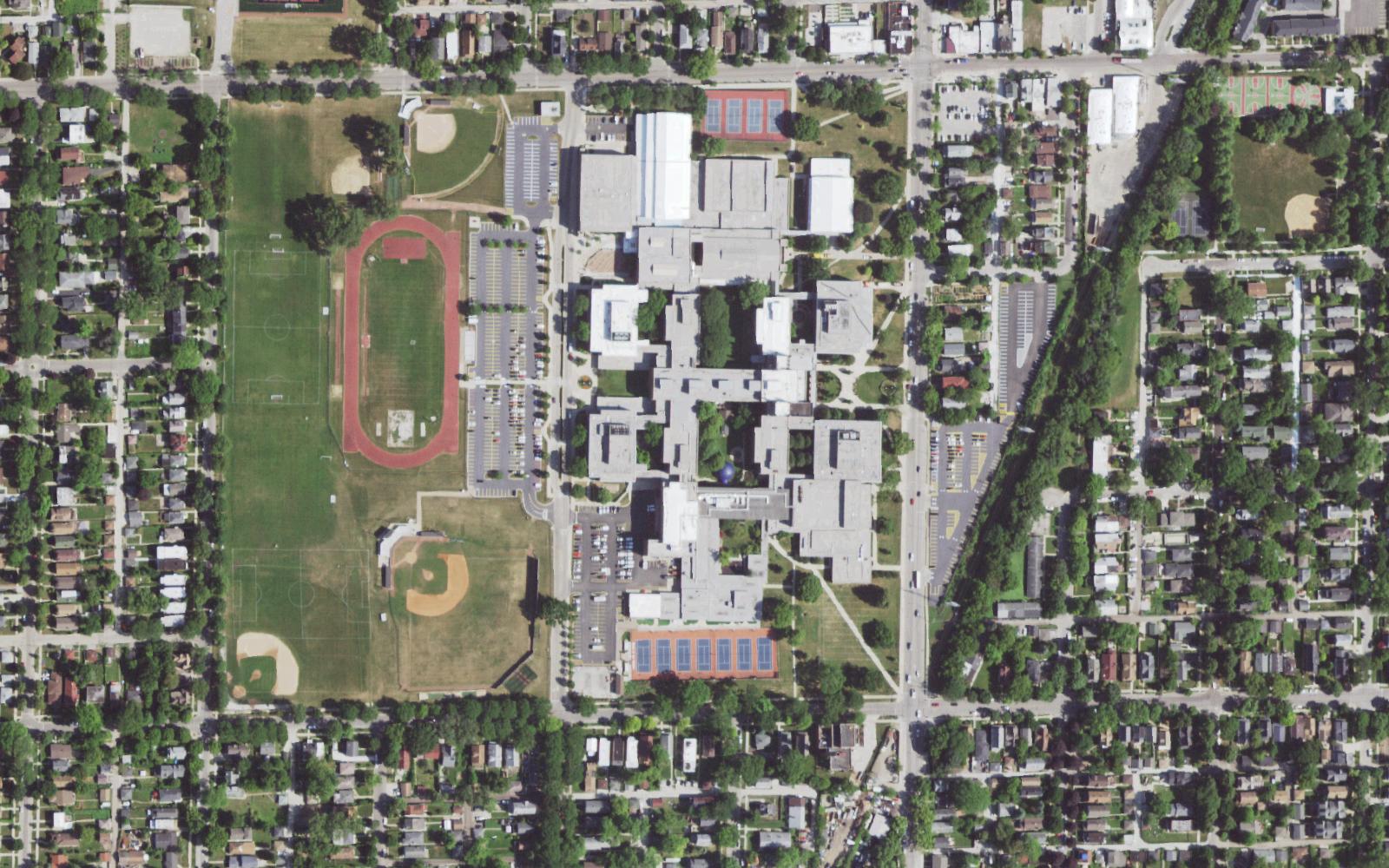 Solar X-Ray · Evanston, IL
Your rooftops, from above.Real aerial · sample
Solar X-Ray · Evanston, IL
Your rooftops, from above.Real aerial · sample
The moat
Solar is a roof deal first. We start there.
A panel out-lives the roof under it. The deals that close are the ones where the roof works, or is ready to be replaced with the install.
Roof-replacement-readiness
We score every home by roof age, material, and recent permit. Sweet spot: 7-12 years on asphalt, old enough to bundle a re-roof into the solar quote and young enough to do it without a tear-off later.
Roof azimuth from LiDAR
The plane fitter gives us roof orientation per home, not just per parcel. South / southeast / southwest faces get scored; pure north faces get scored down.
Investors don't buy solar, owners do
ZIP + house-number ownership compare flags absentee owners. Solar campaigns stay in the owner-occupant lane (84.9% of Cook) and skip the rental stock.
The X-Ray
Neighborhoods, ranked by re-roof-and-solar opportunity.
The score blends roof age, orientation, ownership, and home value into one rank, then tags every neighborhood with whether it's a "fit" play (panels go on what's there) or a "bundle" play (re-roof folds into the install).
- FIT vs BUNDLE tag per neighborhood
- Median roof age + orientation share
- Owner-occupant % and home value band
- Reason codes for every cluster
- Suppression of recently re-roofed homes (no double sale)
The Campaign Map
FIT, BUNDLE, or SKIP: per home.
Each home in the campaign carries a tag, and that tag drives both the offer and the script. The FIT homes get the financing pitch; the BUNDLE homes get the re-roof-plus-solar number; the SKIP homes never see a mailer.
- Per-home FIT / BUNDLE / SKIP tag
- Owner-occupant filter applied automatically
- Recent-permit suppression (no overlap with active roofers)
- Tracking IDs for QR / phone attribution
- Projected ROI band with bundle uplift
What goes in
Every signal that drives the score.
Year built + permit window
Sweet spot is 7–12 years on asphalt; outside that band, the score drops.
Asphalt, tile, metal
Material drives the bundle math. Asphalt within the warranty window is the cleanest re-roof-plus-solar play.
South-facing wins
From LiDAR plane fits. S/SE/SW gets scored up; pure north scored down.
How many panels fit
Measured squares per home: bigger usable roof, bigger system.
The deal needs an owner
Property vs mailing ZIP + house number. Absentee owners drop off the lead lane.
No double sale
Homes that re-roofed in the last 2 years are suppressed, since the roofer already won that deal.
ROI math, honest
Why solar X-Rays carry the highest ROI band.
Solar tickets are large, the close cycle is long, and the wrong target is a sunk cost. Concentrating mail spend on FIT and BUNDLE homes is the difference between a 22× campaign and a 3× one.
We project ROI bands; we do not promise install counts. Your finance partner, close rate, and quote velocity all factor in.
Already running roofing?
Run them off the same map.
If you have a roofing crew, the BUNDLE neighborhoods are a layered campaign: same target list, two offers, one truck-roll. The Cross-Trade Briefing names the one neighborhood worth running as a roof + solar combo this quarter.
Guardrails
What we say. What we don't.
Score by roof age, orientation, material, and ownership, all public-record.
Tag every home FIT / BUNDLE / SKIP so the offer and script match the roof.
Skip absentee owners and homes the permit data says were just re-roofed.
Promise an install count, financing approval, or kWh production.
Sell homeowner contact data. The campaign list ships only to the contractor running the campaign.
Imply utility, government, or incentive-program affiliation.
FAQ
The questions solar reps ask first.
Does this work outside Cook County?
Yes. The depth varies by county. Cook has the full permit + LiDAR moat; other counties usually have parcel + ownership + year built + GIS footprint. The X-Ray runs on what each county actually publishes.
How accurate is the azimuth signal?
It comes from the plane fit on public LiDAR, and works best for homes with simple roof geometry. It is less precise on complex hipped or shaded roofs. We tag confidence on every measurement; low-confidence azimuths drop off the FIT lane.
Can you tell me which homes already have panels?
We flag visible existing arrays from public aerial. That is used for suppression, not as a sales claim. We don't represent the install year or the inverter brand.
What about shade?
Tree-line proximity is part of the score. We flag dense canopy near a roof's south face. A site visit is still the source of truth for shade. We just keep those homes off the mail list when the public signal says no.
What does a Solar X-Ray cost?
$1,500–$2,500 for the service-area scan, ranked neighborhoods, and first campaign map. The Campaign Map deploy and tracking are quoted separately.
Your cockpit
Sign in to your live Solar X-Ray.
Ranked neighborhoods by re-roof-readiness, per-home FIT / BUNDLE / SKIP tag, and a deployable owner-occupant list. It all runs live in your browser. Nothing leaves your account.
- FIT / BUNDLE / SKIP per neighborhood
- Median roof age, orientation share, owner-occ %
- Per-home azimuth, age, re-roof flag
- Suppressed: recently re-roofed + absentee owners
- Bundle uplift forecast vs roofing pair
Run the Solar X-Ray on your service area.
Give us your county and a target ZIP set. We'll come back with the ranked neighborhoods, the FIT/BUNDLE/SKIP split, and the first campaign map.
Request a Solar X-Ray