Drainage & Waterproofing · Territory X-Ray
The homes with wet basements already happening.
Here's what you get: your neighborhoods ranked by real flood-risk and basement signals: FEMA flood zone, First Street risk factor, basement type. Then a mail-ready list of the exact homes most exposed, per-home flood factor included. Sell where the water actually is.
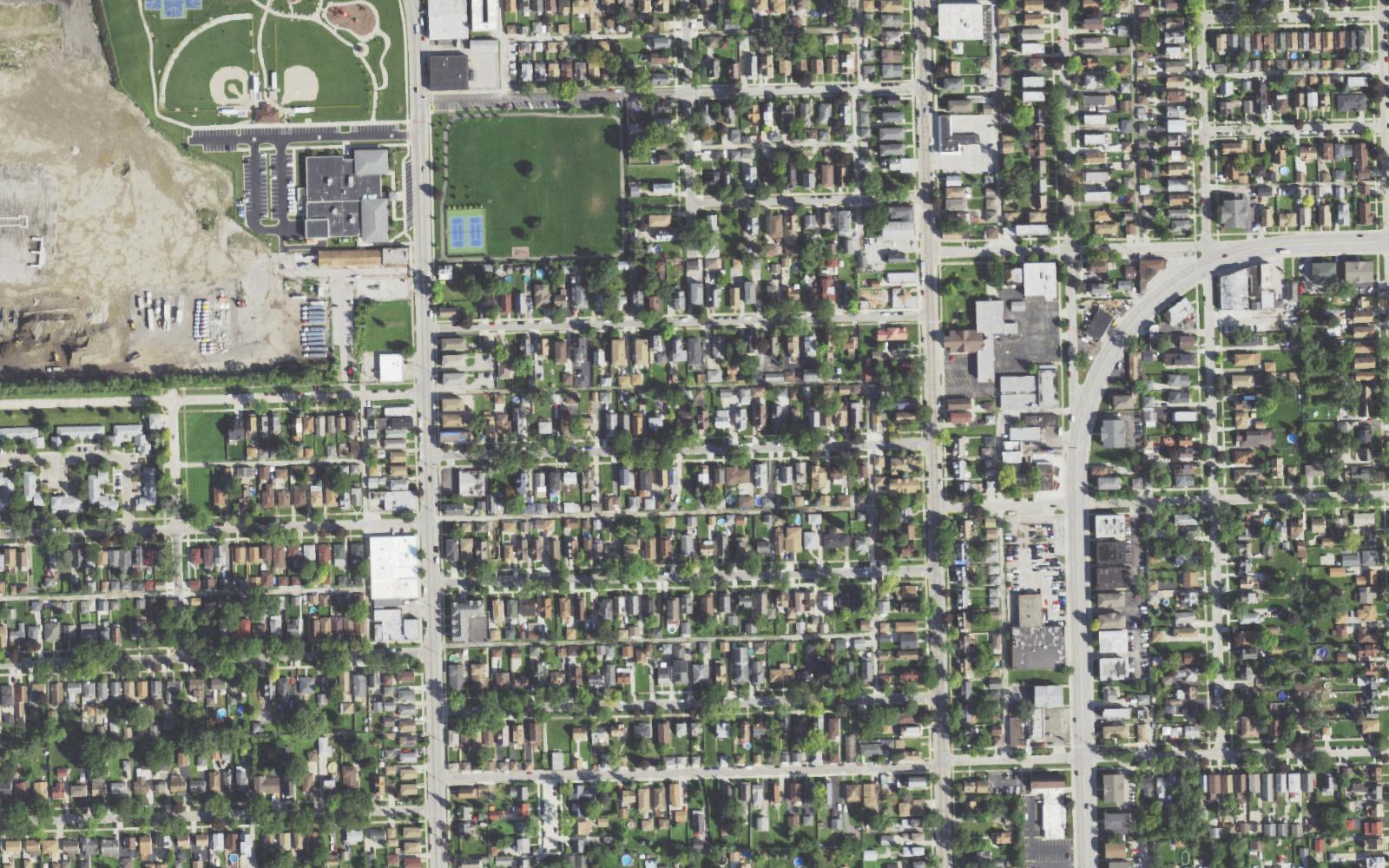 Drainage X-Ray · Lyons, IL
Your service area, from above.Real aerial · sample
Drainage X-Ray · Lyons, IL
Your service area, from above.Real aerial · sample
The moat
Three signals. The rest is noise.
Waterproofing demand follows water. The public record knows exactly where it is.
The 11,100 already-flagged homes
FEMA's Special Flood Hazard Area, per PIN. These homes know they have a flood problem, and their insurance reminds them every year.
The 108k homes in the soft middle
First Street factor 5–10 captures the homes whose risk is real but uninsured. Big addressable market, and they don't get a federal letter telling them so.
Finished basements close higher
From CAMA. Finished basements buy waterproofing at a higher ticket and a higher close rate. Crawl-space-only neighborhoods get a different campaign.
The X-Ray
Ranked by the homes that already have the problem.
Score blends FEMA + First Street + basement type + ownership. The top neighborhoods are where water shows up in the public record, and where waterproofing actually closes.
- Cluster rank with SFHA + factor distribution
- Median First Street factor (1–10)
- Basement-type mix per neighborhood
- Owner-occupant % and absentee split
- Year-built band (older basements need it more)
The Campaign Map
Per-home flood factor and basement type. On the mailer.
The campaign list carries the flood factor for each home plus the basement type. The door script writes itself: "Your home shows a flood factor of 7. Your basement is finished. Here's what that costs to fix in your neighborhood."
- Per-home First Street factor (1–10)
- FEMA SFHA flag
- Basement type (finished / unfinished / crawl)
- Owner-occupant filter
- Per-home tracking ID
What goes in
Every signal that drives the score.
Official 100-yr floodplain
Per-PIN flag from the official FEMA layer. The most concrete public signal a home has a problem.
Risk band 1–10
From the CCAO universe env_flood_* fields. Captures the homes outside SFHA whose risk is real but uninsured.
Finished / unfinished / crawl
From CAMA. Drives ticket size and close rate.
Foundation age
Older basements have older waterproofing systems and more accumulated wall damage.
Position vs neighbors
Low-lot homes ride into the floodplain even outside SFHA, surfaced where GIS supports it.
Owner-occupant filter
Waterproofing is an owner-occupant sale. Absentee landlords go to a separate maintenance lane.
ROI math, honest
How a Drainage X-Ray pays for itself.
Worked off a 1,500-home first-campaign cell, focused on Factor ≥ 5 with a finished basement.
Lower base multiplier than roofing or solar, but the close rate on SFHA homes runs significantly higher because the problem is already documented.
Run gutters too?
Bad gutters cause wet basements.
The Cross-Trade Briefing names the neighborhood where gutter repair and basement waterproofing are both hot: a natural two-stage offer where the gutter fix is the first ticket and the waterproofing follows.
Guardrails
What we say. What we don't.
Surface FEMA SFHA, First Street factor, and basement type per home, all public record.
Skip homes with no flood signal and no basement.
Project ROI assuming an owner-occupant lane.
Claim a specific basement is flooded or that water damage has occurred. Risk factor is risk, not history.
Sell homeowner contact lists.
Imply insurance or FEMA program affiliation.
FAQ
The questions waterproofers ask first.
How current is the FEMA layer?
FEMA SFHA from the most-recent published flood maps. Where a community has updated maps we use the new layer; where they haven't we use the prior issued map.
What is First Street factor?
A modeled flood-risk score 1–10 that the CCAO has integrated into its parcel universe via the env_flood_* fields. It captures risk outside the SFHA, where the risk is real but uninsured.
What does basement type actually tell me?
It tells you whether the home is a waterproofing buyer at all (crawl-only is generally not) and what the ticket size looks like (finished basements run higher). It does not tell you whether water has gotten in.
Can you handle sump-pump replacement vs full system?
The X-Ray ranks neighborhoods; you decide which offer to lead with. The campaign list carries the basement type so you can split the offer per home.
What does a Drainage X-Ray cost?
$1,500–$2,500 for the service-area scan, ranked neighborhoods, and first campaign map.
Your cockpit
Sign in to your live Drainage X-Ray.
FEMA SFHA flags, First Street factor per home, basement type, and the deployable owner-occupant list (live in your browser). The wet basements show up to you, not the competition.
- Per-home First Street factor 1–10
- FEMA SFHA flag
- Basement type per home
- Owner-occupant filter applied
- SFHA close uplift forecast
Run the Drainage X-Ray on your service area.
Give us your county and the towns you work. We'll come back with the ranked neighborhoods, the FEMA + factor distribution, and the first campaign map.
Request a Drainage X-Ray