Siding & Exterior · Territory X-Ray
Skip the 490,000 masonry homes that will never buy.
Here's what you get: your neighborhoods ranked by how many homes you can actually sell: frame, stucco, and vinyl kept in, the ~490,000 brick-and-stone homes dropped. Then a mail-ready list of the real, quotable addresses. No wasted mailers on walls you'll never touch.
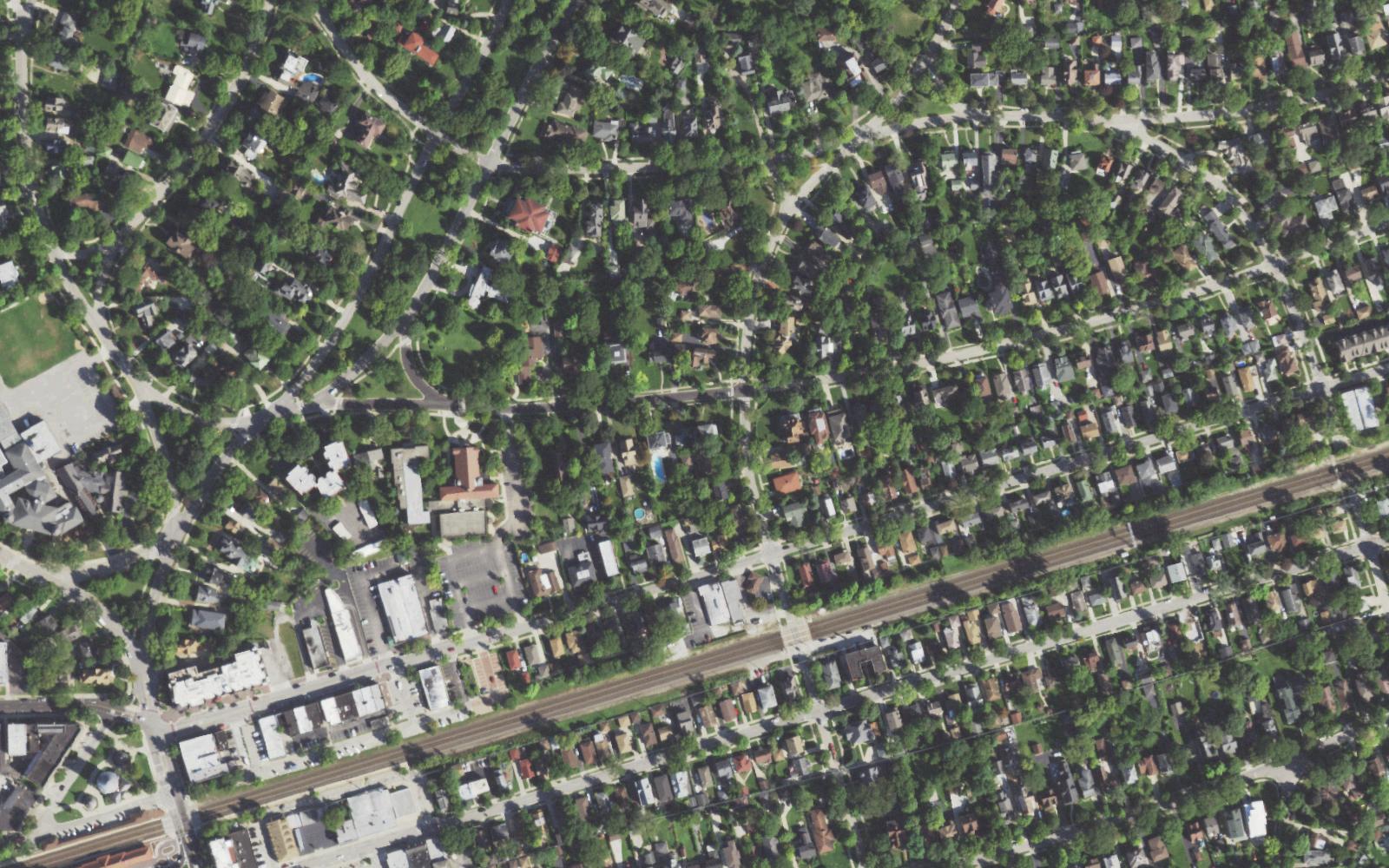 Siding X-Ray · Riverside, IL
Your service area, house by house.Real aerial · sample
Siding X-Ray · Riverside, IL
Your service area, house by house.Real aerial · sample
The moat
The simplest moat: don't mail a brick house.
Almost every siding mailer in Cook County wastes 44% of its spend on masonry homes. We don't.
Read from the public record
Frame, vinyl, and stucco are buyers, while brick, stone, and block are not. We read it straight from CAMA and filter the mail list.
Past the original-cladding warranty
Vinyl from the 90s is past its warranty window. Frame from the 50s with original cladding is a teardown candidate. We band by age and bias the campaign.
Hail-cohort cross-reference
The same NOAA hail database that powers the Roofing X-Ray also surfaces homes whose siding may have been hit. Used for timing, not damage claims.
The X-Ray
Neighborhoods, ranked by targetable stock share.
Score blends targetable-stock %, year-built band, ownership, and storm overlay. The neighborhoods where 80%+ of the homes can actually buy siding get the priority lane.
- Cluster rank with targetable share
- Material mix (frame / vinyl / stucco / masonry)
- Year-built band (warranty-aware)
- Hail-cohort overlay where it applies
- Owner-occupant vs investor
The Campaign Map
Every home tagged by material, before the truck rolls.
Per-home material flag means the door knock script and the mailer offer match the cladding. Vinyl replacement gets one pitch, frame re-side gets another, and stucco repair gets a third.
- Per-home material flag
- Year-built band (warranty proximity)
- Hail-cohort flag where it applies
- Masonry homes automatically suppressed
- Per-home tracking ID
What goes in
Every signal that drives the score.
Frame, vinyl, stucco, masonry
From CAMA's exterior-wall field. Drives the targetable share per neighborhood.
Cladding warranty bands
1980s-2000s vinyl is end-of-warranty, while pre-1960 frame is original-cladding territory.
NOAA storm context
Townships that took storm waves are timing-aware for repair leads.
Cross-trade indicator
An asphalt roof and an old vinyl wrap often age together, so the bundle math gets stronger.
Owner vs investor
Owner-occupants get the re-side pitch; absentees get the value-protection pitch.
Recent exterior work
Homes whose exterior was just done drop off the campaign list.
ROI math, honest
What 44% masonry suppression does to your ROI.
Worked off a 1,500-home first-campaign cell, versus the same campaign with no material filter at all.
The biggest lift comes from removing the homes that will never call.
Run roofing or gutters too?
Frame homes are exterior-bundle gold.
A frame home past its cladding warranty often has the same-vintage roof and gutter underneath. The Cross-Trade Briefing names the one neighborhood where the bundle plays, and which crew leads the visit.
Guardrails
What we say. What we don't.
Filter to homes whose wall material the public record says you can actually quote.
Band by year built so the warranty conversation matches the home.
Overlay hail cohorts for storm-timing context.
Claim a specific siding has hail damage or needs replacement. Cohort overlay is for timing, not damage.
Sell homeowner contact lists.
Promise a quote-to-close ratio.
FAQ
The questions siders ask first.
How accurate is the wall material data?
In Cook County, the CAMA exterior-wall field is populated for 100% of residential parcels. Outside Cook the coverage varies; we tag the confidence and the X-Ray flags low-confidence rows for site verification.
What about partial brick, brick front and frame sides?
CAMA's exterior-wall code captures the dominant material. Partial-brick homes are a known edge case and we keep them in the "review" lane rather than auto-suppress.
Can you cross with hail-storm history?
Yes. Same NOAA SPC layer the Roofing X-Ray uses. Cohort overlays let you time the campaign to a known storm window without claiming damage.
What about the bundle play?
If you run roofing and siding together, the Cross-Trade Briefing names the one neighborhood worth a layered campaign: same drop, two offers.
What does a Siding X-Ray cost?
$1,500–$2,500 for the service-area scan, ranked neighborhoods, and first campaign map.
Your cockpit
Sign in to your live Siding X-Ray.
Material mix per neighborhood, vintage bands, masonry suppression, and the deployable list. All of it live in your browser. Skip the 490,000 homes that won't buy.
- Targetable-stock % per neighborhood
- Material mix (frame / vinyl / stucco)
- Vintage bands tied to cladding warranty
- Hail-cohort overlay where applicable
- Masonry homes auto-suppressed
Run the Siding X-Ray on your service area.
Give us your county and the towns you work. We'll come back with the ranked neighborhoods, the material mix, and the first campaign map.
Request a Siding X-Ray